Top 8 Bland AI Alternatives In 2026 (Reviewed and Compared)
Stop debugging experimental APIs. Discover reliable Bland AI alternatives built for enterprise scale, consistent latency, and transparent pricing models.





Bland AI gained significant attention for its ability to create realistic, conversational AI phone agents. It demonstrated the potential of generative voice AI to a wider audience, particularly for developers and early adopters interested in viral marketing applications.
However, by 2026, as the technology matures, enterprises' focus has shifted from novelty to stability. Businesses running critical operations such as customer support, appointment setting, and logistics are increasingly identifying gaps in consistency, transparent pricing, and ease of integration.
If you are evaluating a Bland AI alternative that prioritizes reliable business infrastructure and operational control, this guide provides a detailed market analysis. We review the top Bland AI competitors to help you select a platform that aligns with your specific scalability and performance requirements.
Reasons to Consider a Bland AI Alternative
Operational teams often face specific hurdles when scaling their use beyond initial experiments with Bland AI, leading them to consider using Bland AI alternatives:
- Latency Consistency: While often fast, latency can fluctuate during high-traffic periods, impacting the natural flow of professional sales or support calls and frustrating customers.
- Developer Dependency: The API-first nature of the platform often creates a bottleneck, requiring expensive engineering resources for every minor script change or workflow adjustment.
- Cost Predictability: Users often find that add-on fees for transfers and specific advanced features make it difficult to forecast the Total Cost of Ownership (TCO) accurately.
- Support Structure: For businesses without enterprise contracts, relying on community-based support can be a significant risk for mission-critical phone number lines and outbound calls.

Key Evaluation Criteria for Voice AI Platforms
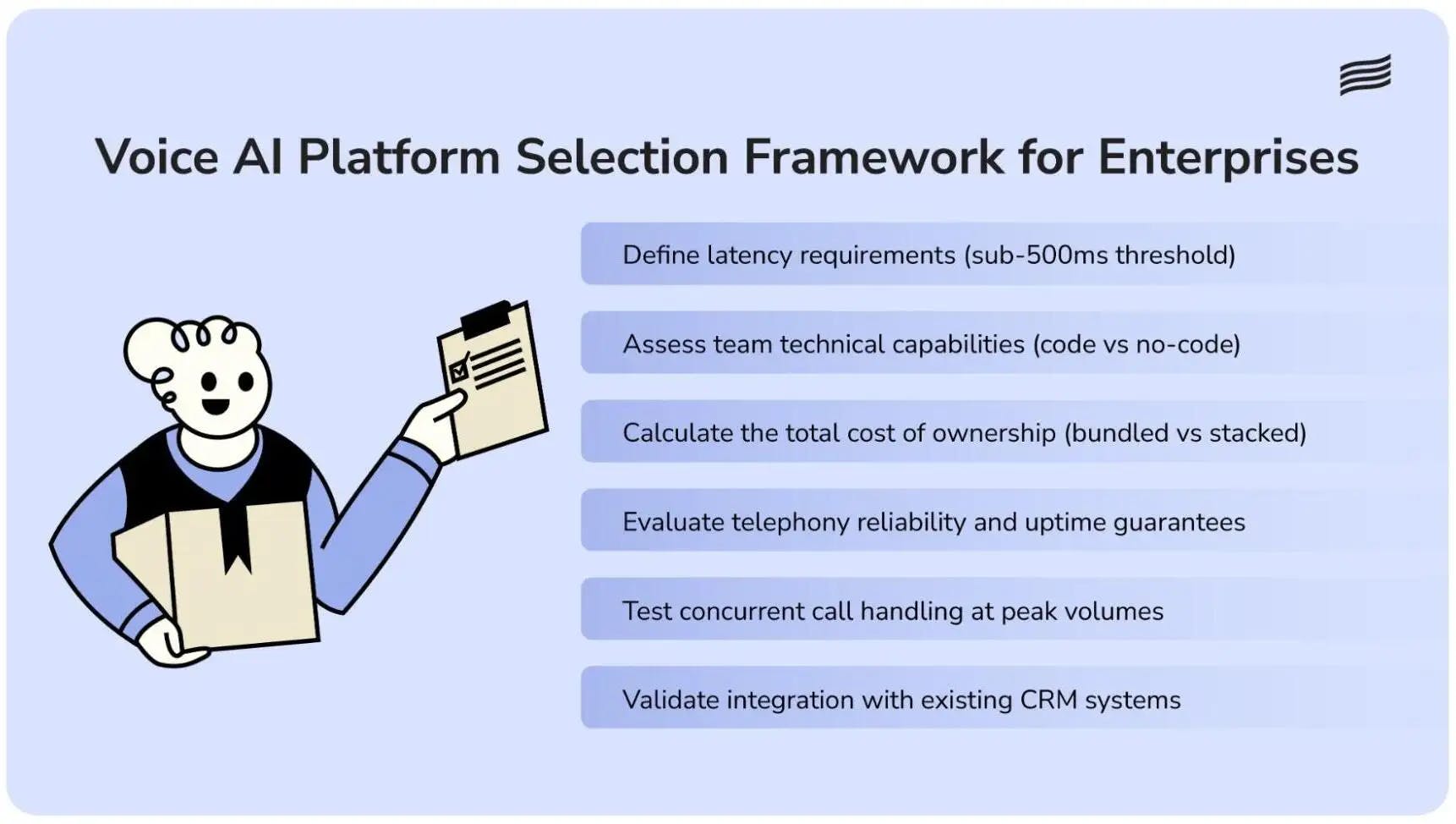
Decision-makers must look beyond viral demos and prioritize infrastructure that can handle real conversations reliably under the pressure of concurrent calls.
- Sub-500ms Latency: <500ms is the non-negotiable threshold for ensuring human agents and AI can interact naturally without awkward pauses or interruptions.
- Operational Usability: Availability of visual no-code builders allows small teams to manage workflows without needing constant assistance from a code platform.
- Telephony Reliability: Native handling of carrier connections ensures clear audio and high connection rates for large enterprises managing thousands of customer calls.
- Scalability: The infrastructure’s ability to handle concurrent calls ensures that call routing remains stable even during peak operational hours or seasonal spikes.
Comparing Top Bland AI Alternatives
Here is a high-level comparison of 5 leading platforms in case you're in a hurry
| PLATFORM | BEST USE CASE | OPERATIONAL EASE |
|---|---|---|
| Ringg AI | Business operations teams needing scalable, human-like voice agents without writing code | High (No-Code) |
| Retell AI | Developers looking to build and code their own custom voice applications from scratch | Medium (Low-Code) |
| Haptik | Brands prioritizing text-based chatbots and messaging systems over live phone calls | Medium |
| Murf.ai | Video editors and creators needing voiceovers for pre-recorded content | Low (No Telephony) |
| Twilio Voice | Developer teams that want to write code to build raw telecom infrastructure piece by piece | Low (Developer Platform) |
Also read: Voice AI Technology in 2026: How AI Assistants Transform Speech to Conversation
1. Ringg AI
Source: Ringg AI
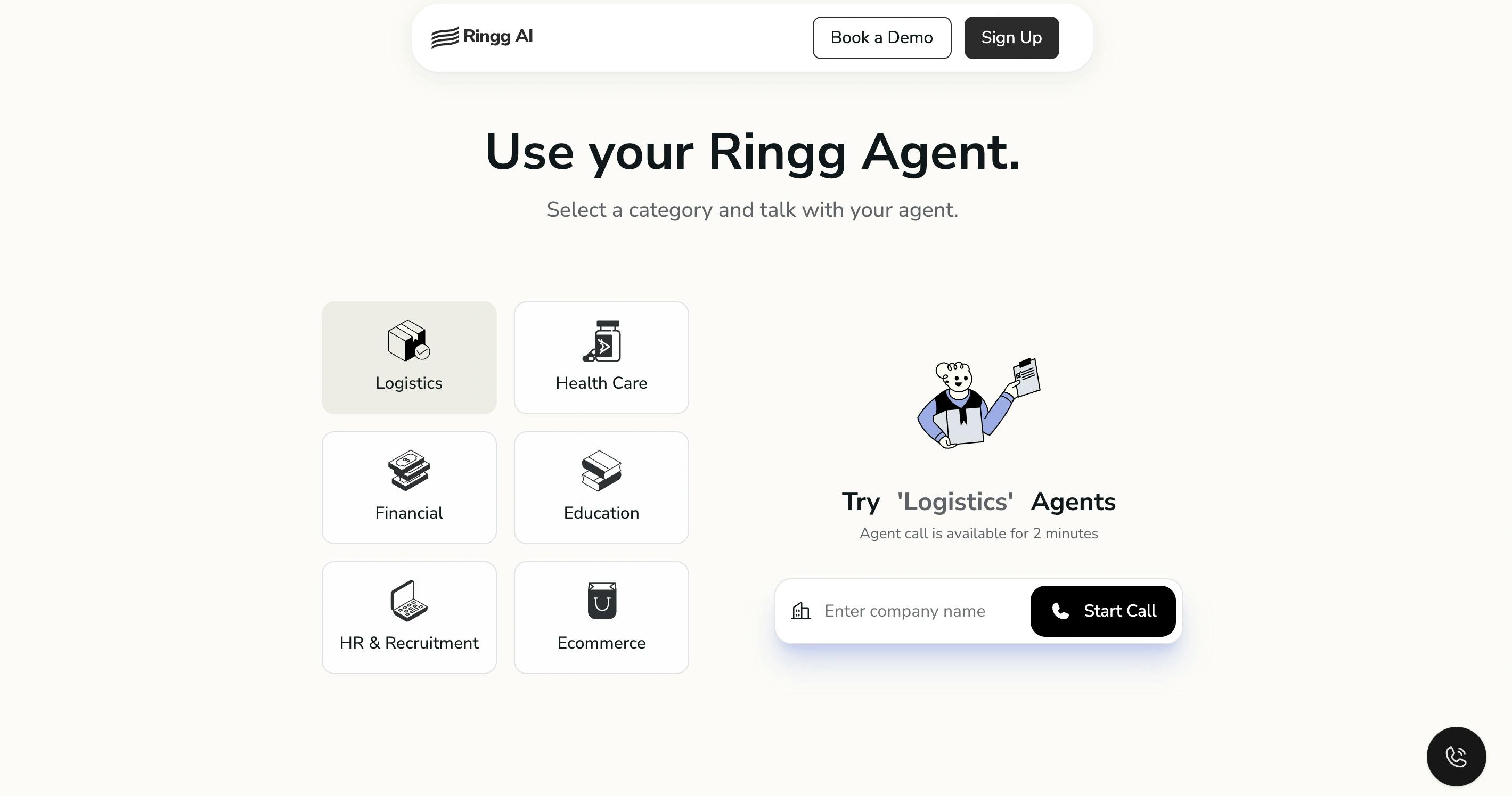
Ringg AI is a comprehensive Voice Operating System designed for business execution rather than development experimentation. While it matches the realistic voice quality found in other tools, it differentiates itself by providing a stable, ‘operations-first’ environment. It allows teams to deploy advanced voice agents that integrate seamlessly with existing business workflows without heavy engineering lift.
What are the key features of Ringg AI?
- Flash Latency Engine (<400ms): The Flash Latency Engine delivers instantaneous responses that mimic human conversation perfectly, ensuring customer experience remains high even during complex interactions.
- Visual Workflow Builder: A visual workflow builder empowers operations teams to design and modify IVR menus and logic trees instantly without writing a single line of code.
- High-Volume Stability: The platform is engineered to handle massive unlimited concurrent calls loads without degradation, making it ideal for large organizations with high traffic.
- Granular Analytics: Detailed reporting provides granular insights into customer details, sentiment analysis, and call outcomes to drive continuous improvement in business communication.
How much does Ringg AI Cost?
Ringg AI pricing bundles telephony, voice, and intelligence. Start scaling immediately without the heavy 'implementation costs' typical of legacy competitors.
| Feature | Flexible Usage Plan | Enterprise Plan |
|---|---|---|
| Rate | $0.10 / Minute Per Connected Call | $0.06 / Minute Per Connected Call |
| Best For | Individuals or teams with occasional needs | Enterprises handling over 100k call minutes |
| Concurrency | Up to 50 Concurrent Calls | Up to 100 Concurrent Calls |
| Bulk Calls | 100 Calls Limit (1 at a time) | 10,000 Calls Limit |
| Inclusions | Free Analytics | Priority Support, Custom Integrations |
Who is Ringg AI Best For?
Enterprises in Logistics, Healthcare, Fintech, and Recruitment requiring a scalable, reliable, and user-friendly voice automation solution.
- Logistics: Automating driver coordination and delivery updates.
- Healthcare: Managing secure appointment scheduling and patient intake.
- Fintech: Handling sensitive collections and payment reminders securely.
- Hiring: Screening candidates efficiently at scale.
What Users Say About Ringg AI?
Users frequently cite the plug-and-play nature of Ringg AI as a key advantage over Bland AI alternatives, noting that it can reduce deployment times from weeks to days. Superior voice quality with low latency ensures customer calls feel professional and maintain conversational flow throughout complex support calls or lead qualification scenarios.
2. Retell AI
Source: Retell AI
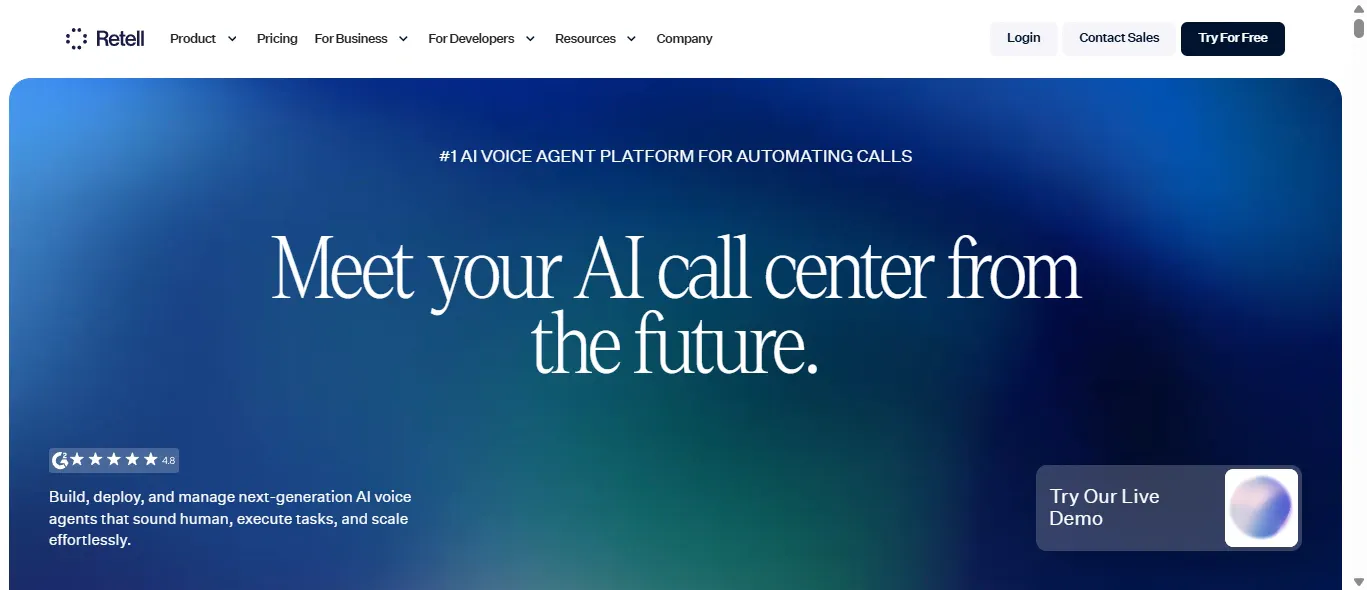
Retell AI positions itself as a developer-first tool, offering a ‘lego-block’ approach to building voice bots. It appeals to engineering teams who want granular control over every component of the stack, from the large language models to the transcription service.
What are the key features of Retell AI?
- Low-code interface for agent configuration with multiple LLM provider options
- Supports unlimited concurrent calls for large-scale outbound campaigns
- Integration with major CRM systems including Salesforce and HubSpot
What are the Pros and Cons of Retell AI?
| Pros | Cons |
|---|---|
| Developer flexibility | Requires coding knowledge |
| Latency controls | No visual builder |
| Active developer community | Fragmented pricing |
How Ringg AI is better than Retell AI
Ringg AI eliminates vendor management complexity through an all-inclusive platform with transparent per-minute pricing and built-in voice synthesis. The visual workflow builder empowers business teams to deploy AI agents without engineering resources, reducing time-to-market from weeks.
Also read: Top 7 Retell AI Alternatives for Businesses in 2026
3. Vapi
Source: Vapi AI
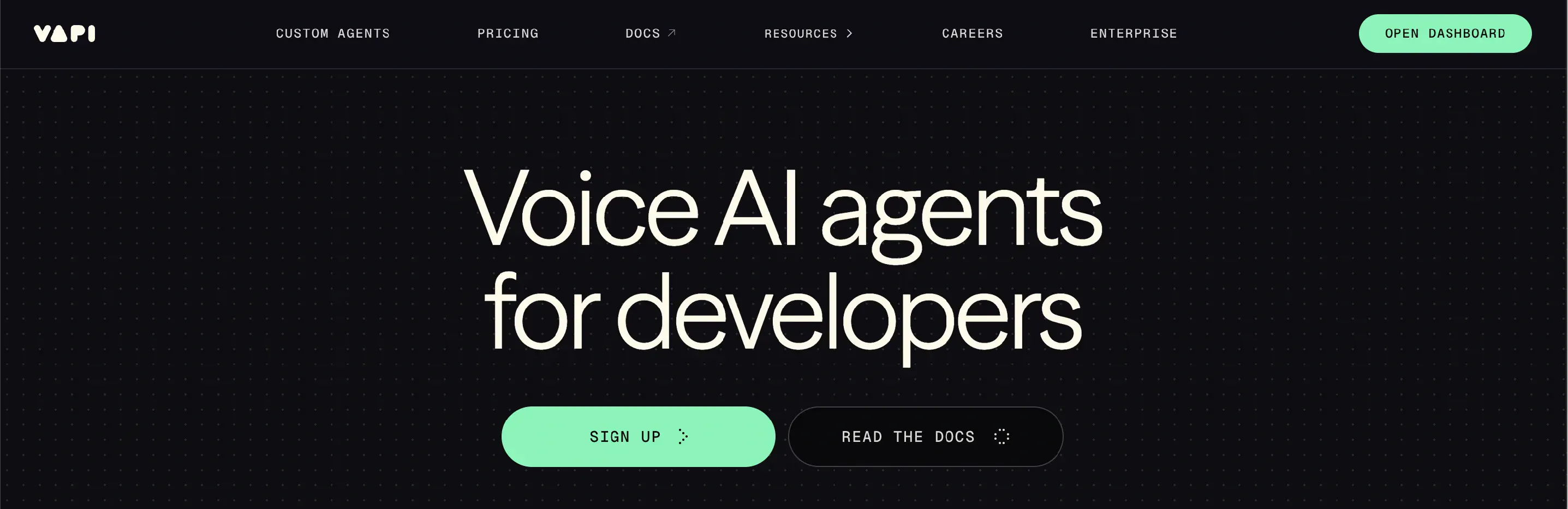
Vapi AI operates as middleware, connecting various voice and AI services. It is a Bland AI Competitor for technical teams who prefer to orchestrate their own stack of providers rather than using an all-in-one platform for their contact center.
What are the key features of Vapi AI?
- Flow Studio for visual conversation design with conditional logic
- Real-time WebRTC audio streaming for low-latency voice transmission
- Support for ElevenLabs, Play.ht, Azure, and OpenAI TTS providers
What are the pros and cons of Vapi AI?
| Pros | Cons |
|---|---|
| Flexible provider choice | Multiple bills to pay |
| Documentation | No native telephony |
| Developer-friendly | Complex debugging |
How Ringg AI is better than Vapi
Ringg AI bundles the carrier, intelligence, and logic into one platform. Vapi requires you to manage multiple vendor relationships and invoices, which increases the administrative burden on enterprise teams.
Also read: 9 Best Vapi AI Alternatives For 2026: Build vs Buy Guide
4. Awaz AI
Alt Text: Screenshot of Awaz AI homepage
Source: Awaz AI
Awaz.ai is a no-code AI voice platform designed to help businesses automate inbound and outbound phone calls without requiring technical skills. It focuses on handling 24/7 customer interactions like appointment booking, lead qualification, and basic support using natural conversational AI.
What are the key features of Awaz AI?
- Configurable workflow builder to create conditional logic and align AI responses with operational processes.
- Sentiment monitoring and built-in analytics to track conversation trends and call outcomes.
- Centralized knowledge management that allows users to upload up to 30GB of training materials for structured responses.
What are the pros and cons of Awaz AI?
| PROS | CONS |
|---|---|
| 14-day free trial available | Lacks robust multilingual support |
| Easy tone personalization | Not built for high-volume enterprise calling |
| White-labeling features for agencies | High per-minute usage costs ($0.40/min) |
How Ringg AI is better than Awaz
AI While Awaz AI is accessible for small businesses, it falls apart under enterprise volume and lacks deep global language capabilities. Ringg AI is built for massive scale, effortlessly handling thousands of concurrent calls in 20+ languages, all while offering a much more cost-effective and transparent flat rate (starting at $0.06/min) compared to Awaz's expensive $0.40/min pricing.
5. Haptik
Source: Haptik AI
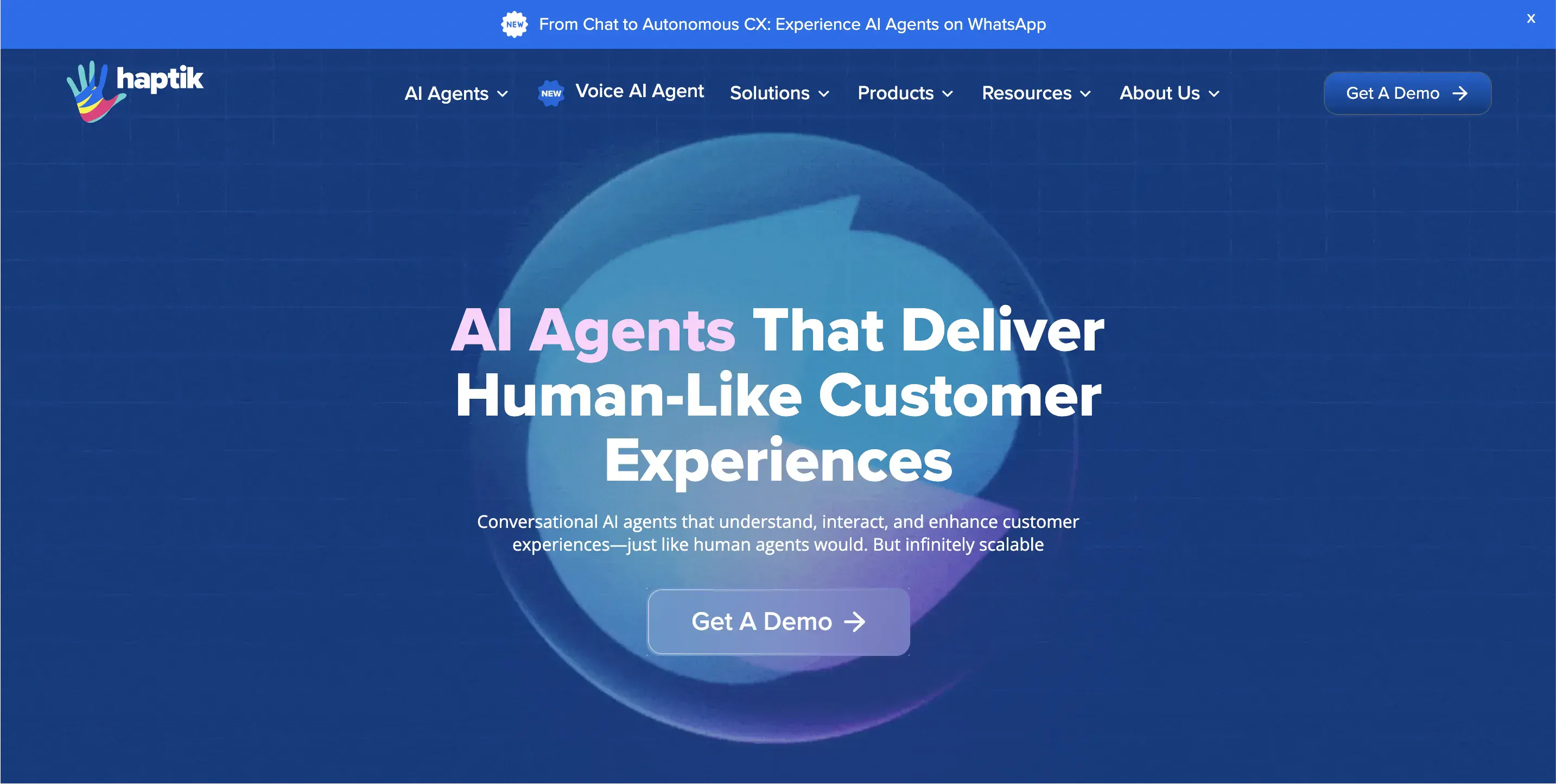
Acquired by Jio, Haptik is a strong competitor in the Conversational AI space, particularly known for its dominance in Asian markets and omnichannel support. It focuses heavily on customer support automation for retail and e-commerce brands.
What are the key features of Haptik?
- Omnichannel deployment across voice, WhatsApp, web chat, and mobile apps
- Multilingual support covering 100+ languages with dialect recognition
- Pre-built industry solutions for retail, BFSI, travel, and telecom verticals
What are the pros and cons of Haptik?
| Pros | Cons |
|---|---|
| Suitable for retail | Voice quality varies |
| Regional NLP | Limited global reach |
| WhatsApp integration | Rigid template flows |
How Ringg AI is better than Haptik?
While Haptik requires enterprise budgets starting around $5,000 annually with custom quotes, Ringg AI offers predictable costs from $0.06-0.10 per minute enabling accurate budget forecasting for organizations of all sizes without lengthy procurement cycles.
6. ElevenLabs
Source: ElevenLabs
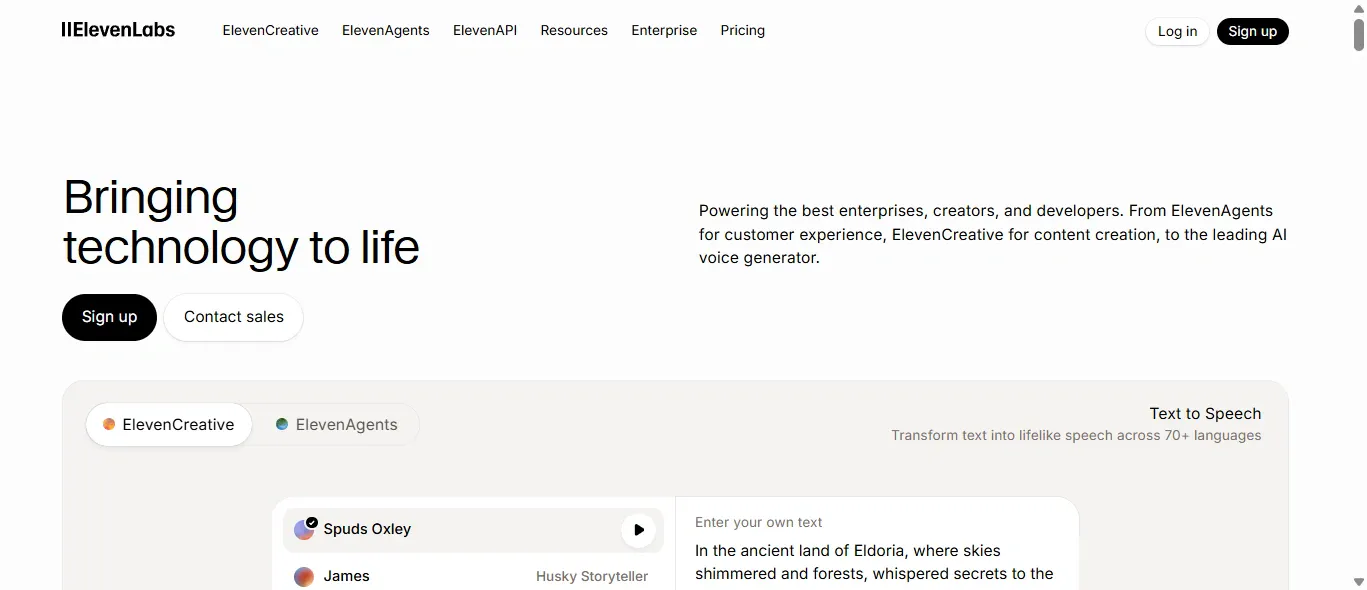
ElevenLabs is primarily a generative voice research company, known for its industry-leading voice quality. It is a Bland AI Alternative for creating audio content but lacks the native telephony infrastructure needed for live phone calls.
What are the key features of Elevenlabs?
- Industry-leading voice synthesis with natural intonation and emotion
- Voice cloning from short audio samples for brand-consistent voices
- Multilingual support with cross-language dubbing capabilities
What are the pros and cons of Elevenlabs
| Pros | Cons |
|---|---|
| Audio realism | No call handling |
| Voice library | High latency |
| Emotional nuance | No conversation logic |
How Ringg AI is better than ElevenLabs
ElevenLabs creates audio files; Ringg AI conducts phone calls. Ringg integrates high-quality voices into a system that can actually listen, think, and respond in real time over the telephone network.
7. Murf.ai
Source: Murf AI
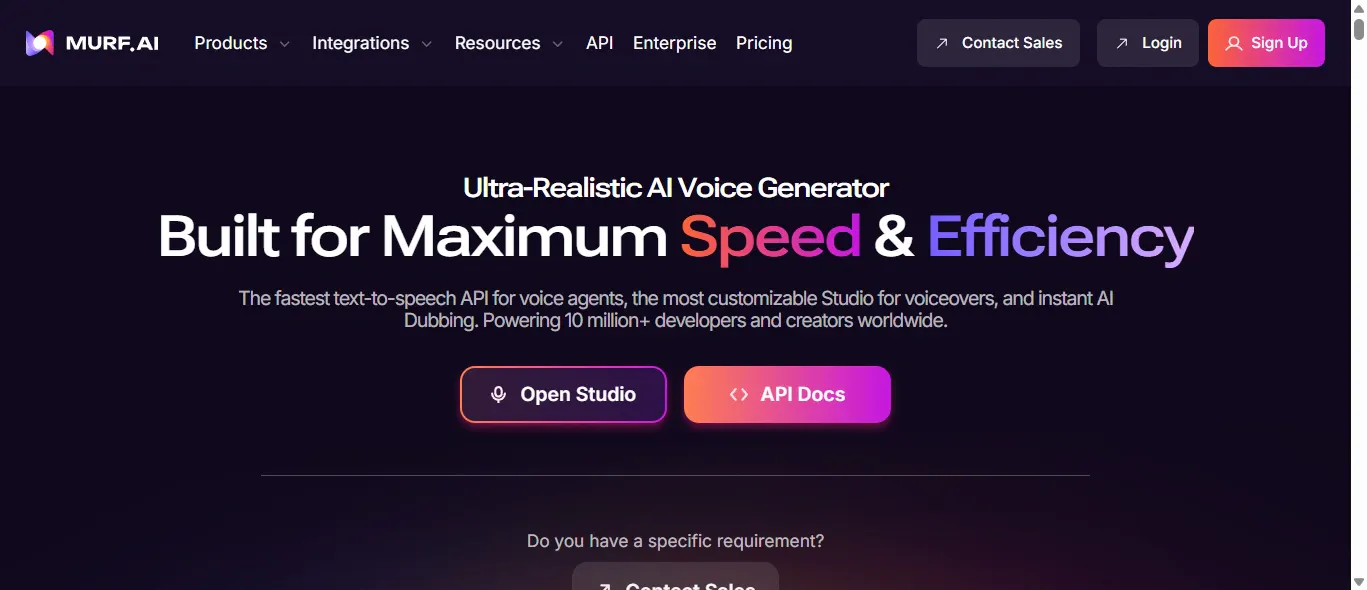
Murf.ai is a versatile voice generation platform popular among content creators and educators. It competes as a Bland AI Competitor in the non-interactive space, specializing in creating high-quality static audio for e-learning, presentations, and videos.
What are the key features of Murf.ai?
- 200+ ultra-realistic AI voices with 99.38% pronunciation accuracy
- 35 languages and 10+ accents with multilingual voice support
- Voice cloning from 2-minute audio samples for brand consistency
What are the pros and cons of Murf.ai?
| Pros | Cons |
|---|---|
| Excellent editor UI | No telephony stack |
| Great for e-learning | Not for live calls |
| Professional voices | Pay per download |
How Ringg AI is better than Murf.ai
Murf.ai is excellent for creating static files for videos, but it cannot handle a live conversation. Ringg AI is the operational choice for businesses that need to automate real-time phone agent interactions and support calls.
8. Twilio Voice
Source: Twilio
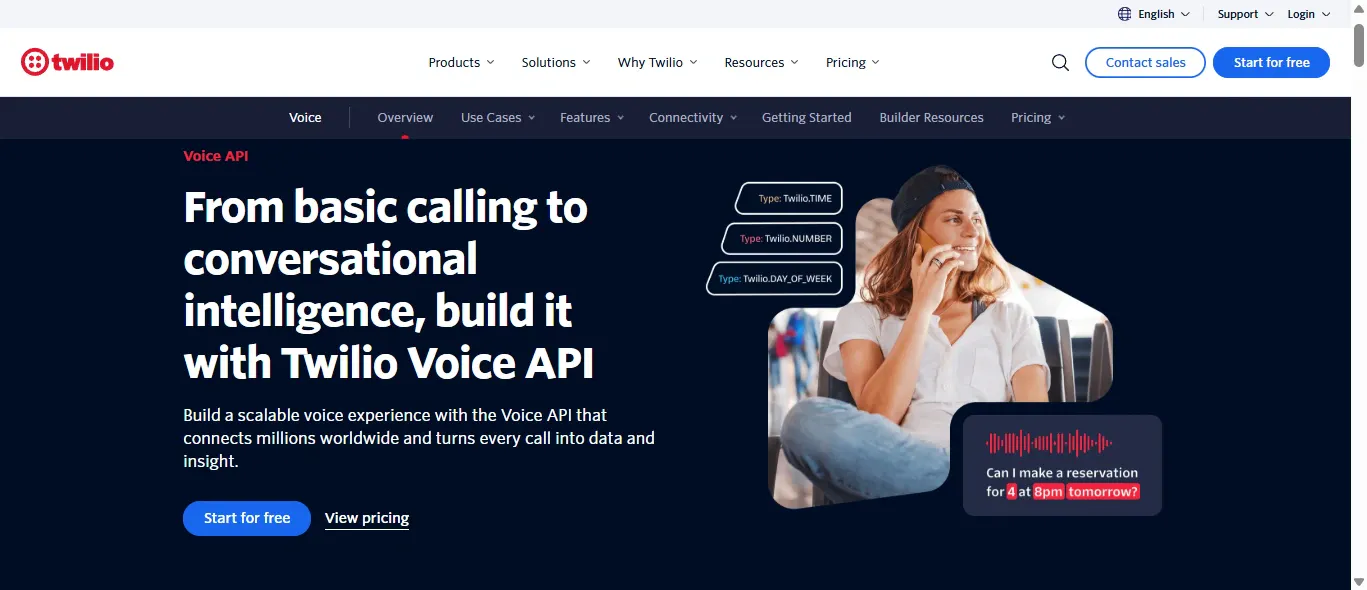
Twilio Voice provides the raw infrastructure that powers many other platforms. It offers total control to engineering teams who want to build a voice solution from the ground up using speech recognition and TwiML.
What are the key features of Twilio?
- Enterprise-grade telephony infrastructure with global reach
- Programmable voice APIs for custom call routing and handling
- Reliable carrier connections with high availability SLAs
What are the pros and cons of Twilio?
| Pros | Cons |
|---|---|
| Customizable APIs | Requires full coding |
| Global scale | No built-in AI |
| Documentation | High development cost |
How Ringg AI is better than Twilio Voice
Twilio is the foundation, not the house. Ringg AI is built on top of robust telephony but adds the AI intelligence and visual tools, saving you years of development time on ai voice agent platform creation.
Also read: A Guide to Evaluating AI Voice Agents in 2026
What Ringg AI Does Best
Ringg AI directly addresses the stability and control issues that compel businesses to seek a Bland AI Alternative. We prioritize operational reliability over viral features.
- Production-Grade Stability: Unlike experimental platforms, Ringg AI prioritizes consistent uptime and voice quality for mission-critical operations, ensuring your knowledge base is accessed reliably.
- Transparent Billing: Ringg AI offers clear, predictable pricing structure without the hidden "developer" fees, free credits confusion, or complex add-ons found elsewhere.
- Human-Centric Latency: With <400ms response times, Ringg AI ensures conversations feel natural and professional, building trust with customers through superior low-latency performance.
- Operational Independence: The platform empowers business teams to manage agents directly via a code interface free visual builder, removing the engineering bottlenecks associated with API-first tools.
Final Remarks
While Bland AI helped popularize generative voice agents, the market demand has shifted toward utility and reliability. For enterprises looking for a Bland AI competitor that functions as a dependable business tool rather than a tech demo, the choice is clear. Ringg AI offers the optimal balance of speed, control, and performance.
You need a partner that scales with your business, not one that breaks under pressure. Ready to upgrade your voice operations? Book a demo with Ringg AI.
We don't pitch AI hype.
We deliver business outcomes.
Frequently Asked Questions
Ringg AI is the best overall alternative for enterprises. It combines the realistic voice capabilities of Bland AI with the operational stability, visual workflows, and transparent pricing required for mission-critical business communication.
Related Articles
Bland AI Pricing: A Complete Breakdown For 2026
Understand why Bland AI costs more in production & how you can save more with Ringg AI.
Is Sierra AI Pricing Worth It In 2026? A Close Look at Cost vs Value
A 2026 pricing reality check: why Sierra’s opaque enterprise model can get expensive, and how Ringg AI lowers risk.
Lindy AI Pricing: A Guide For 2026 [+ The Hidden Cost of Credits]
Compare Lindy AI’s credit-based pricing model with Ringg AI’s flat per-minute rates. Find the best value for your business.